

If you've ever meticulously washed your car, only to watch it dry covered in ugly white spots, you know the frustration of hard water. The secret to a spot-free finish isn't just about the soap you use or how hard you scrub—it's about tackling the water itself.
To get that perfect, showroom shine with hard water, the game plan involves using a pH-neutral shampoo, avoiding direct sunlight to slow down evaporation, and—this is the most important part—using deionized or softened water for the final rinse. From there, drying your vehicle completely with top-notch microfiber towels is absolutely crucial.
Why Hard Water Ruins Your Car's Perfect Finish

It’s a classic story for any car enthusiast. You spend the better part of an afternoon washing, scrubbing, and rinsing, only to step back and find your hard work rewarded with a constellation of chalky blemishes. Those aren't specks of dirt you missed. They're the ghosts of your tap water.
This is the calling card of hard water, which is just a simple way of saying your water is loaded with dissolved minerals like calcium and magnesium. When you douse your car, those minerals are floating around. As the water evaporates, the H₂O disappears, but the minerals get left behind on your paint, glass, and chrome trim.
The real problem isn't just the spots themselves, but what they become over time. If you leave them be, these mineral deposits can actually etch into your car's clear coat, causing permanent damage that only a professional polish can fix.
The Science Behind the Spots
You have to know your enemy to defeat it. Water is officially classified as hard when its calcium carbonate levels climb above 121 mg/L, and the effect on a car’s finish is pretty brutal. It dulls your paint, etches the glass, and can even start to corrode metal parts over the long haul. Because the mineral residue doesn't just evaporate with the water, it bakes onto the surface, leaving those stubborn spots that are a nightmare to wipe away.
The experts at Turtle Wax Pro have detailed guides on just how challenging washing with hard water can be.
Your Strategy for a Spot-Free Finish
Beating hard water spots requires a specific strategy, not just more effort. Every step of the process needs to be intentional and designed to neutralize the minerals before they can cause trouble. To really stop hard water from ruining your car's finish, you need to understand the root causes and even learn how to improve water quality at the source.
To give you a bird's-eye view, here's a quick look at the game plan we'll walk through in this guide.
The Hard Water Car Wash Strategy at a Glance
This table breaks down the entire process into manageable stages, so you can see how each step contributes to that flawless, spot-free shine.
| Stage | Objective | Key Tool |
|---|---|---|
| Pre-Wash | Loosen and lift heavy dirt and existing minerals without touching the paint. | Foam Cannon or Sprayer |
| Contact Wash | Safely clean the surface using lubrication to prevent scratches. | Two Buckets, pH-Neutral Soap |
| Spot-Free Rinse | The crucial step: rinse away all soap and tap water minerals. | Deionized Water System |
| Protective Drying | Remove every last drop of water before it can evaporate and leave a spot. | High-Quality Microfiber Towels |
| Long-Term Protection | Create a barrier that makes future washes easier and repels water. | Wax, Sealant, or Ceramic Coating |
By following this approach, you're not just washing your car; you're actively fighting against mineral deposits at every turn. This is how you achieve that professional-looking, brilliant shine every single time, even if your hose is pumping out the hardest water in the state.
Gathering Your Hard Water Detailing Arsenal
If you're fighting hard water spots, you can't just grab any old soap and a bucket. That's a recipe for frustration and a car that looks worse after you wash it. Tackling this problem is all about having the right tools for the job—think of it as building a specialized toolkit designed to neutralize the minerals in your water before they can ruin your paint.
Hard water is stubborn. Its high mineral content—mostly calcium and magnesium—actively works against regular car shampoos. It kills the suds, reduces cleaning power, and leaves behind that chalky, spotty film we all hate. This is why your choice of supplies is so critical.
The Core Gear You Can't Skip
You don't need a professional detailer's entire garage, but a few key pieces of equipment are non-negotiable. Investing in these items will make all the difference between a spotted mess and a gleaming finish.
Here’s what every hard-water warrior needs in their corner:
- A Solid pH-Neutral Car Shampoo: Forget the cheap stuff. A quality pH-neutral soap is formulated to lather up even in mineral-rich water. It cleans effectively without leaving its own residue, which is half the battle.
- Foam Cannon (or Foam Gun): This is your secret weapon. Hooked up to a pressure washer or garden hose, a foam cannon covers your car in a thick, clinging foam. This isn't just for show—it softens and lifts dirt and mineral deposits, pulling them away from the paint so you can rinse them off without scrubbing.
- A Dedicated Water Spot Remover: Let's be realistic; a few spots might still pop up. A good water spot remover is a lifesaver. It uses a mild acidic formula to dissolve those baked-on mineral circles without damaging your car's clear coat. It's the perfect tool for targeted touch-ups.
- High-Quality Microfiber Drying Towels: Ditching the old bath towels or chamois is a must. A large, plush microfiber towel, especially a waffle-weave one, is incredibly absorbent. It soaks up water on contact, pulling it off the surface before it can evaporate and leave those dreaded mineral deposits behind.
How These Tools Work Together
Each piece of this kit plays a specific role. The foam cannon does the heavy lifting pre-wash, minimizing the risk of scratching. The specialized soap ensures a clean, residue-free surface. The spot remover is your problem-solver for stubborn areas, and the microfiber towels are your last line of defense.
Want to see what else can take your detailing game to the next level? Check out our comprehensive car detailing supplies list for more professional-grade recommendations.
Key Takeaway: The goal here is to work smarter, not harder. The right gear creates a controlled process where minerals never get a chance to bond to your paint in the first place. That's the real secret to a perfect, spot-free wash.
Setting the Stage: Your Pre-Wash Strategy
Before your wash mitt even gets close to the paint, the real work against hard water begins. This first step is all about getting a head start by loosening up the dirt and, more importantly, those stubborn mineral deposits.
The golden rule here is simple but non-negotiable: always wash your car in the shade or on a cool, overcast day. If you wash in direct sun, the heat will cause the water to evaporate almost instantly, leaving behind an even more concentrated mess of mineral spots. You'll be fighting a losing battle before you even start.
Working on a cool surface gives you time and control. It’s also the perfect moment to remember the fundamentals, like the two-bucket wash method. One bucket for your soapy water, one for clean rinse water. This simple technique stops you from dragging gritty minerals and dirt right back across your car's finish, which is a surefire way to cause scratches.
This visual guide lays out the essential tools you'll need in your arsenal against hard water.
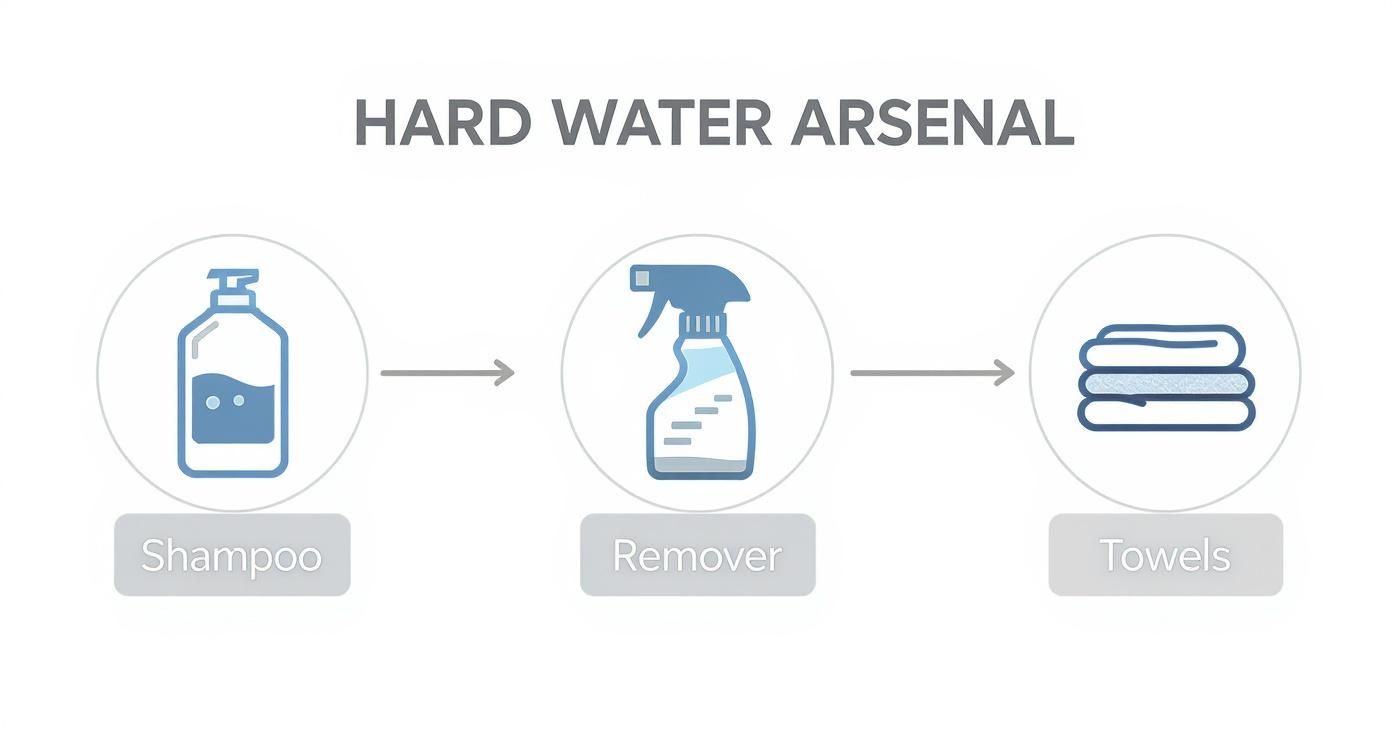
From a specialized shampoo to a dedicated spot remover, each product is designed to tackle the specific problems that mineral-heavy water creates.
Cover It in Foam
Now for the main event of the pre-wash: laying down a thick blanket of foam. Whether you’re using a foam cannon with a pressure washer or a foam gun hooked up to a garden hose, the goal is the same. You want to completely cover the vehicle in a layer of clinging suds.
This isn't just for show. The foam gets to work immediately, softening and lifting away dirt and mineral residue from the paint. Let it sit for a few minutes, and you’re giving the soap time to break the bond between the grime and your car's clear coat. This lubrication is especially critical when dealing with hard water, as the minerals can make dirt feel like sandpaper during a contact wash.
Expert Tip: Never let the foam dry on the car. Let it dwell long enough to do its job—usually 5-10 minutes is perfect—then rinse it off completely. If it starts to dry, you're just creating a new set of spots to deal with.
A good foam pre-soak means you'll have to do far less scrubbing later, which is always a win for your paint. This isn't a niche problem, either. For example, in the UK, roughly 60% of homes get hard water, making a spot-free wash a constant challenge. The minerals actually fight against the soap, reducing its ability to foam up and clean effectively. You can learn more about the effects of washing cars with hard water to see just how deep the issue goes.
Think of the pre-wash not as an optional extra, but as the foundation of your entire wash. It’s your first and best move in the fight for a truly spot-free shine.
Mastering The Spot-Free Rinse And Dry
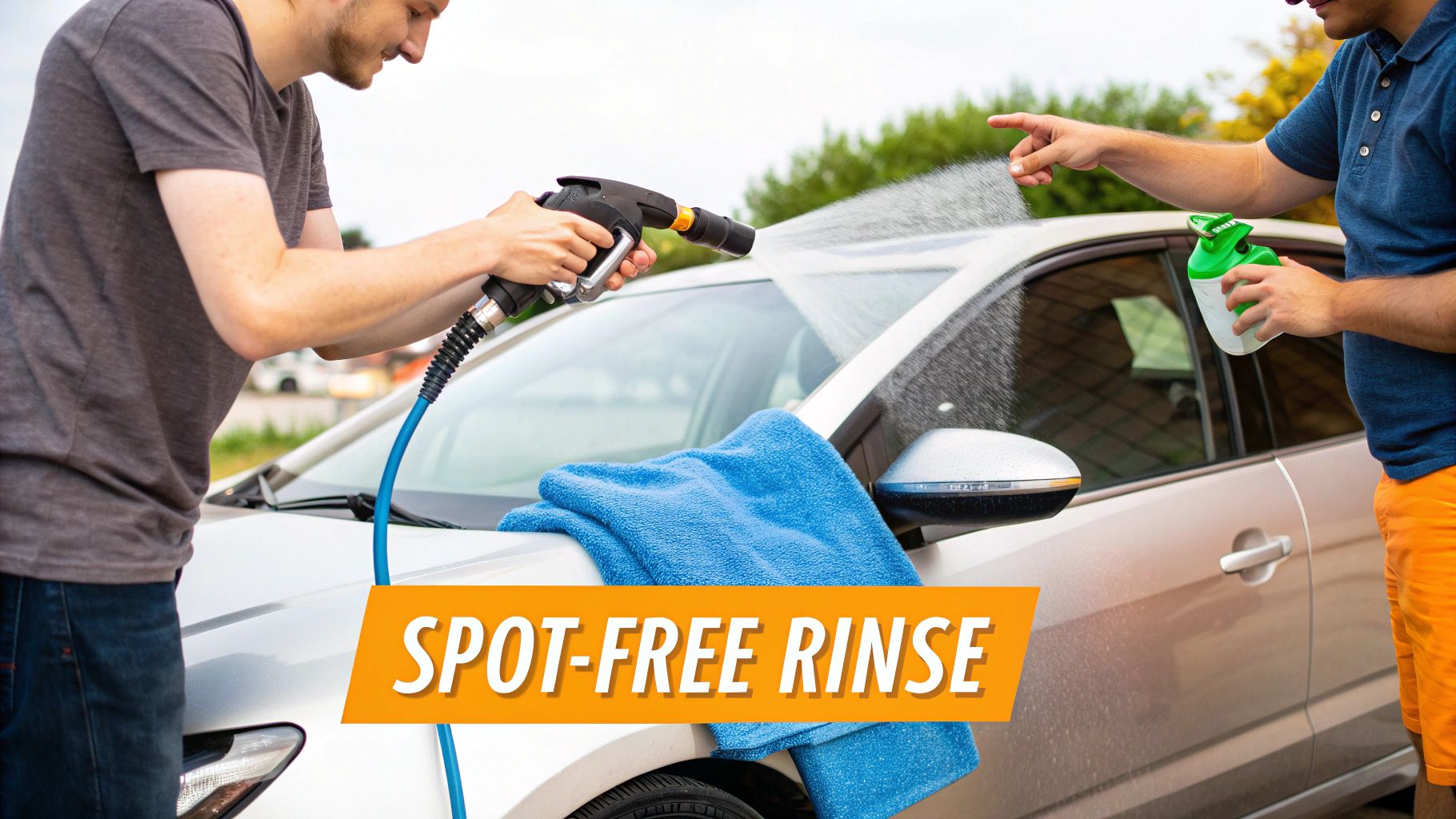
You’ve done the hard work—the pre-wash, the foam bath, and the careful hand wash. But now comes the moment of truth. This final stage, the rinse and dry, is where a great wash becomes a perfect one, or where hard water rears its ugly head and ruins all your effort.
The secret weapon here isn't rinsing harder or faster; it's about rinsing smarter. The goal is to make sure the last drops of water that evaporate off your paint are completely pure, leaving no minerals behind.
That’s where deionized or distilled water comes in. This water has had all the problem-causing minerals like calcium and magnesium stripped out. When it evaporates, it leaves nothing behind—just a clean, glossy surface. It’s the gold standard for professional detailers, and for good reason. For a deeper dive, it’s worth understanding the science behind spot-free cleaning with deionized water.
Practical Rinsing Solutions
Don't worry, you don't need to install a pricey deionizing system to get these results. There’s a much simpler and more affordable trick that works just as well.
Grab a basic garden pump sprayer and fill it with a gallon or two of distilled water, which you can find at any grocery store. After you've done the main rinse with your hose to get the soap off, just walk around the car and give every panel a final, light misting with the distilled water from your sprayer.
This quick final pass displaces the mineral-filled tap water with pure water, guaranteeing a clean evaporation process.
This technique isn’t just for looks; it’s also smarter for water conservation. The average car wash can use around 207 liters of water. Using a targeted pure water rinse for the final step means you don't have to endlessly flood the car with hard water trying to chase spots, making the whole process more efficient.
The Art of Drying: A Two-Step Approach
As soon as that final rinse is done, the race against evaporation begins. To prevent any stray droplets from leaving their mark, you need a solid drying strategy. I’ve found a two-pronged approach works best.
First, tackle the big, flat areas—the roof, hood, and doors—with a high-quality microfiber drying towel. Look for a large, plush, waffle-weave towel; they are absolute sponges and are much safer on your paint than old-school chamois.
The key is to use the "blot" or "drag" method. Lay the towel flat across the panel and gently pull it toward you. Don't scrub or use circular motions. Let the towel do the work. We cover this and other techniques in our guide to the best way to dry car after washing.
Next, it's time to hunt down the hidden water. These are the spots that will come back to haunt you with drips and streaks long after you've put everything away.
- Around your mirror casings
- Inside door handles
- Behind emblems and in the grille
- Along panel gaps and trim pieces
A powerful car dryer or even a clean leaf blower is the perfect tool for this. Blast the water out of these crevices with focused air. This touchless method ensures you get every last drop, leaving you with a flawless finish that was truly worth the effort.
Dealing With Stubborn Spots and Protecting Your Paint
Even when you do everything right, a few stubborn spots can hang on, especially if you’re working on a car that's been battling hard water for a while. Don't worry, though. You've got some great options for getting rid of what's there and making sure they don't come back.
For those fresh, light spots that are just sitting on the surface, a dedicated water spot remover is your best friend. These are usually mild acidic cleaners specifically designed to break down mineral deposits without messing with your paint. The key is to always use them on a cool surface, working one small section at a time.
Just spray a little remover onto a microfiber applicator, gently work it into the spot, and then wipe the residue off with a clean, damp microfiber towel. I always follow up with a quick detailer spray to neutralize the area completely—it’s a small step that ensures no acidic cleaner is left to dry on your paint.
When a Chemical Cleaner Doesn't Cut It
So, what happens when you’re dealing with spots that have been baked on for weeks or months? Over time, those minerals can actually start to etch into your car's clear coat, leaving a faint but permanent outline that a chemical cleaner just won't touch. If you've tried a spot remover and can still see the ghost of the spot, it’s time to get a little more physical.
This is where a good, fine-grade automotive polish and a foam applicator pad become necessary. Polishing is essentially a very gentle abrasive process. It carefully smooths out the clear coat, leveling it just enough to erase the etching. Work the polish in with light pressure until the spot is gone, then wipe the panel clean. For a deeper dive into this process, check out our guide on how to remove hard water stains on the blog.
Pro Tip: Always start with the least aggressive method first. Only reach for the polish after a chemical water spot remover has proven ineffective. This strategy is all about preserving as much of your car's precious clear coat as possible.
Getting Ahead: Proactive Protection
Once you've got your paint looking perfect and spot-free, the goal is to keep it that way. The best defense is a good offense, and in this case, that means applying a layer of protection to make it tough for new spots to even form. A good protective layer creates a hydrophobic surface—basically, it makes the paint so slick that water can't stick.
You have a few solid choices here:
- Wax: The old-school classic. It gives you a fantastic deep gloss and will offer a few weeks of solid protection.
- Sealant: Think of this as a synthetic, super-wax. It’s a polymer that bonds to your paint for more durable protection that often lasts several months.
- Ceramic Coating: This is the top-tier, long-term solution. A ceramic coating creates a hard, semi-permanent shell over your paint that can last for years with the right care.
No matter which one you go with, the effect is the same. Water will bead up and roll right off the panel, carrying the minerals away with it. This simple preventative step not only makes future washes way easier but is also your best weapon in the ongoing fight against hard water.
Digging Deeper: Your Hard Water Car Wash Questions
Even when you think you've got the process down, a few questions always pop up. Let's tackle some of the most common things I hear from people struggling with hard water so you can wash your car with total confidence.
Can I Just Use Vinegar to Get Rid of Water Spots?
This is a classic "DIY" tip that floats around, and while a heavily diluted mix of white vinegar and distilled water can work on very fresh, light spots, it's a risky move. You have to remember, vinegar is an acid. If your mixture is too strong or you leave it on the paint for even a little too long, you risk etching and damaging your clear coat.
Honestly, it's just not worth the gamble. A purpose-made, pH-balanced water spot remover from a quality detailing brand is always the safer, more effective bet. These are engineered to dissolve minerals without eating into your car's finish. My advice? Save the vinegar for your windows if you're in a pinch, but keep it far away from your paint.
Will a Ceramic Coating Make My Car Water-Spot-Proof?
A ceramic coating is your best friend in the fight against hard water, but it's not a magic shield. The super hydrophobic surface makes water bead up and fly off the car, which dramatically cuts down on the opportunity for spots to form in the first place. But, if a bead of hard water is left to bake in the sun on a coated panel, it will absolutely leave a mineral deposit behind.
Here's the crucial difference: a ceramic coating creates a sacrificial barrier. The water spot forms on top of that tough, slick coating, not your vulnerable clear coat. This makes removing the spot worlds easier and safer.
Is a Home Water Softener System Really Worth It?
If you're a serious detailer or live in an area with water that's practically liquid rock, then yes, a whole-house water softener or a dedicated deionizing (DI) system for your garage is a total game-changer. These systems pull the minerals out before the water ever hits your car, giving you a perfect, spot-free rinse every time.
Before you pull the trigger on a big installation, think about this:
- How often do you wash? If you're out there every weekend with a bucket and mitt, the time and frustration you save could easily pay for the system over time.
- How bad is your water? Get a simple test kit. If your water hardness is off the charts, a system might be the only path to a truly flawless finish.
- What are the other perks? Remember, soft water is better for everything in your house—from your pipes and dishwasher to your skin and laundry.
For the average enthusiast, a more budget-friendly approach works just as well: just use a gallon or two of distilled water in a simple pump sprayer for your final rinse. The right solution really boils down to your budget and just how obsessed you are with chasing that perfect, spot-free shine when you wash your car with hard water.
Ready to make your next car wash effortless and effective? The SwiftJet Car Wash Foam Gun connects to any garden hose to deliver the thick, dirt-lifting foam you need to combat hard water and achieve a professional clean. Get yours today at https://swiftjetusa.com.
