

The key to keeping chrome wheels looking brand new is using the right combination of gentle cleaners, soft tools, and smart techniques. I always recommend a pH-neutral, non-acidic cleaner applied with something like a foam gun to avoid scratches. By following this method, then properly drying and sealing the surface, you can safely get rid of corrosive brake dust and road grime, protecting that delicate mirror finish for years to come.
Why Your Chrome Wheels Need a Smarter Cleaning Approach
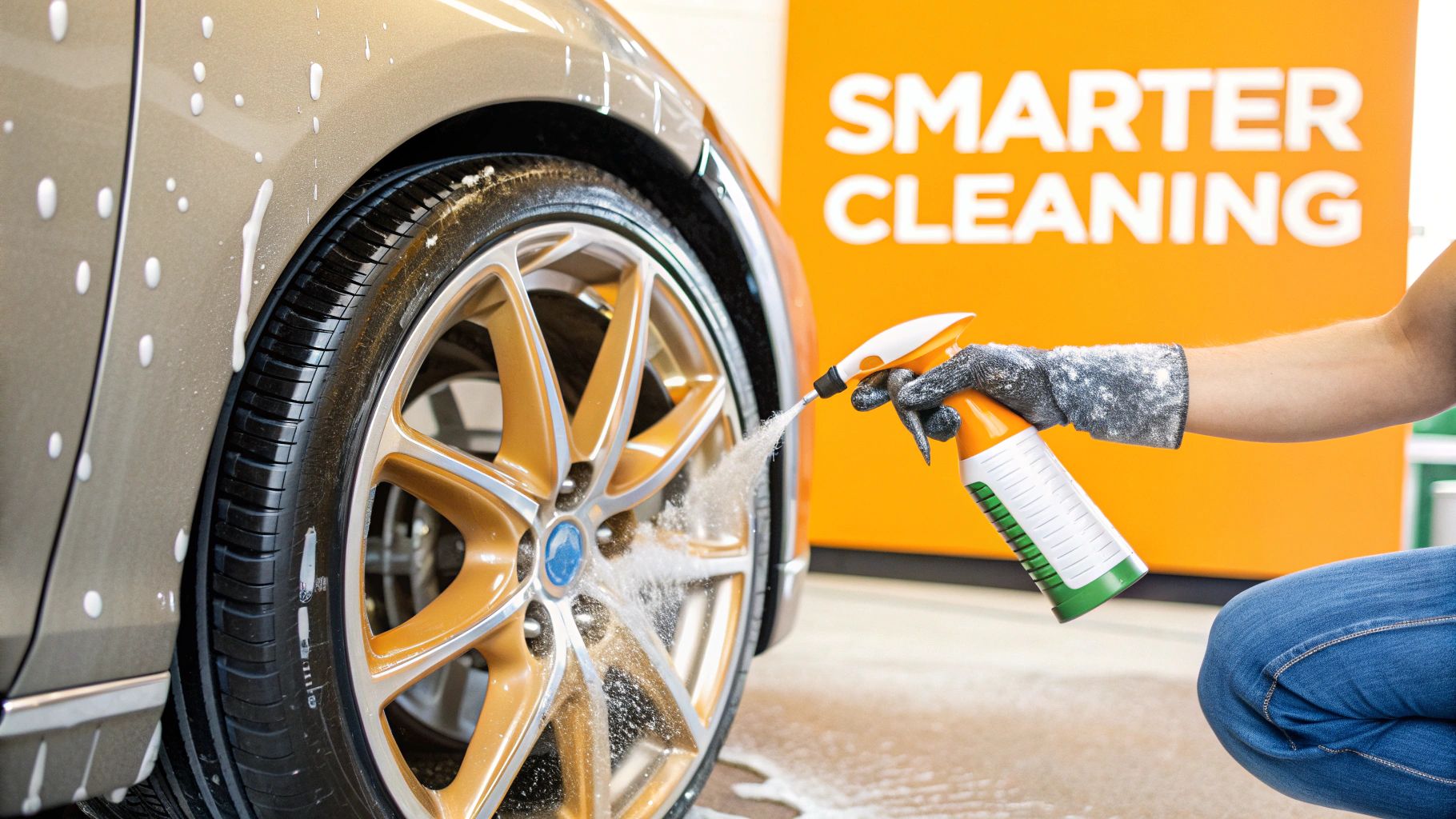
That brilliant, mirror-like shine is the whole point of chrome wheels, but holding onto it takes more than a quick spray-and-wipe. Chrome plating is surprisingly delicate and can be easily damaged by everyday driving conditions.
The Hidden Dangers of Brake Dust and Road Grime
Every time you hit the brakes, a shower of tiny, hot metal particles flies off your brake pads and digs into your wheels. This isn't just dust—it's corrosive brake dust. If you let it sit, it will permanently etch and pit the surface of your chrome.
Road salt, chemical de-icers, and all the other grime kicked up from the street act like sandpaper, grinding away at the chrome's protective layer. Reaching for a harsh, acidic wheel cleaner just makes things worse, fast-tracking the damage and leaving you with a dull, hazy finish or, in worst-case scenarios, peeling chrome.
The reality is that brake dust and road salt are the primary culprits behind most chrome damage. A gentle, consistent cleaning routine is the only effective defense against long-term corrosion and pitting.
The Professional's Secret: Foam Washing
This is exactly why professional detailers have moved away from aggressive scrubbing. The best way to clean chrome wheels involves a foam washing method. Using tools like the SwiftJet Car Wash Foam Gun, you can generate a thick, clinging foam that sits on the wheel's surface, doing the hard work for you.
This foam gently lifts and dissolves grime without needing intense scrubbing, which dramatically cuts down the risk of creating new scratches.
The popularity of chrome is booming, with the global chrome cleaner market hitting $3 billion in 2024. Despite this, a shocking 68% of chrome owners report seeing visible corrosion in the first year, usually because of poor or inconsistent cleaning habits. Old-school techniques just don't cut it against the tough, baked-on grime these wheels face. You can find out more about these automotive market trends.
This guide will walk you through how to adopt this smarter, safer approach to keep your chrome wheels looking flawless.
Getting Your Chrome Wheel Detailing Gear Ready
Before you even think about spraying your wheels, let's talk about setting yourself up for success. Getting that perfect, mirror-like shine on chrome isn't just about elbow grease; it's about having the right tools for the job. Honestly, this is where most people go wrong. Grabbing the wrong brush or a harsh, all-purpose cleaner can instantly scratch the finish or cause chemical etching, turning a simple wash into a nightmare.
First things first: the two-bucket wash method. This is non-negotiable for protecting delicate surfaces like chrome. One bucket is for your soapy water, the other for clean rinse water. Dipping your dirty wash mitt in the rinse bucket before reloading it with soap prevents you from just grinding brake dust and road grit right back into the finish. It’s a simple step that makes a world of difference.
The Right Cleaners and Tools for the Job
Let's get into the specifics. Your choice of cleaner is probably the most critical decision you'll make here.
- pH-Neutral Chrome Cleaner: Chrome is surprisingly sensitive to harsh chemicals. You absolutely need a cleaner that's specifically labeled as pH-neutral or "safe for all wheels." Acidic cleaners will eat right through the protective clear coat, leaving permanent stains or pitting.
- SwiftJet Foam Gun: For the safest possible clean, I swear by a foam gun. The SwiftJet Car Wash Foam Gun is a game-changer. It just hooks up to your garden hose and blankets the wheel in a thick, rich foam. This foam doesn't just run off; it clings, breaking down brake dust and grime so you don't have to scrub aggressively.
- Plush Microfiber Wash Mitt: For the face of the wheel, you want a super-soft, high-quality microfiber mitt. Its job is to gently lift dirt away and trap it deep in the fibers until you rinse it out in your clean water bucket.
When you combine a good foam gun with a soft mitt, you're creating a highly lubricated surface. This is truly the best way to clean chrome wheels because it dramatically reduces the risk of creating those tiny micro-scratches that dull the finish over time.
Before we dive into the step-by-step process, let's lay out everything you'll need. Having it all within arm's reach makes the entire job smoother and ensures you won't be tempted to cut corners.
Essential Toolkit for Cleaning Chrome Wheels
This table breaks down the must-haves and why each one plays a crucial role.
| Tool/Material | Why It's Essential | Pro Tip |
|---|---|---|
| Two 5-Gallon Buckets | Prevents cross-contamination of dirt, which is the main cause of swirl marks on chrome. | Add a Grit Guard to the bottom of each bucket. It traps dirt and prevents your mitt from picking it back up. |
| pH-Neutral Wheel Cleaner | Safely dissolves brake dust and road grime without damaging the sensitive chrome finish. | Always test any new cleaner on a small, inconspicuous area first, just to be safe. |
| SwiftJet Foam Gun | Creates a thick, clinging foam that provides maximum lubrication and minimizes the need for scrubbing. | Use the adjustable nozzle to control the foam thickness. A thicker foam is better for heavily soiled wheels. |
| Soft Microfiber Mitt | Gently cleans the main wheel surfaces without scratching. | Dedicate one mitt just for wheels. Never use it on your car's paint to avoid transferring brake dust. |
| Soft-Bristled Brushes | Reaches into tight spots like lug nut holes and complex spoke designs where a mitt can't go. | An old, soft-bristled toothbrush can work in a pinch for the tightest crevices. |
| Dedicated Tire Brush | Tires need a stiffer brush to scrub away heavy grime. Using a separate one prevents cross-contamination. | For more on this, check out our complete guide on how to clean tires. |
| Plush Microfiber Towel | Dries wheels quickly and safely, preventing water spots from mineral deposits in the water. | Use a blotting or patting motion instead of wiping. This is the gentlest way to dry and avoid streaks. |
With these tools on hand, you’re not just cleaning your wheels—you’re detailing them safely and preserving their finish for the long haul.
The Pro Method for a Flawless Showroom Shine
Alright, you've got your gear laid out, so let's get to work. This isn't just about splashing some soap on and calling it a day. We're going to walk through a professional-grade workflow that safely deep-cleans your chrome and brings out that legendary mirror finish. This process is all about smart preparation, proper decontamination, and careful agitation to get incredible results without a single scratch.
The golden rule here is simple but non-negotiable: work on one wheel at a time, from start to finish. This is critical. Letting cleaning products dry on chrome is a surefire way to cause water spots or, even worse, chemical etching.
Start Cool and Get the Heavy Grime Off
First things first, make sure your wheels are cool to the touch. Seriously, don't skip this. Hitting hot chrome with cold water or cleaners is a recipe for disaster—it can bake the product right onto the surface, leaving behind stubborn streaks and stains.
Once you've confirmed they're cool, grab your hose and give the first wheel a solid pre-rinse. You want to blast away all the loose, caked-on gunk and brake dust. Think of it as clearing the battlefield. This initial rinse gets rid of the bigger, grittier particles that could scratch the finish when you start washing. It's a small step that makes a huge difference in protecting your chrome.
Use an Iron Remover to Decontaminate
For a truly deep clean that gets what normal soap can't, an iron remover is your secret weapon. Over time, tiny hot particles of iron from your brake pads embed themselves into the chrome. A standard wheel cleaner just won't touch them.
Spray a good iron remover all over the wheel right after your pre-rinse. You'll see the magic happen in a minute or two as the liquid turns a deep purple or red. This is the chemical reaction dissolving those stubborn iron deposits—a process we call "bleeding." It’s the only way to safely pull out those corrosive little specks without scrubbing your chrome raw. Just let it dwell for a few minutes per the instructions, but never let it dry.
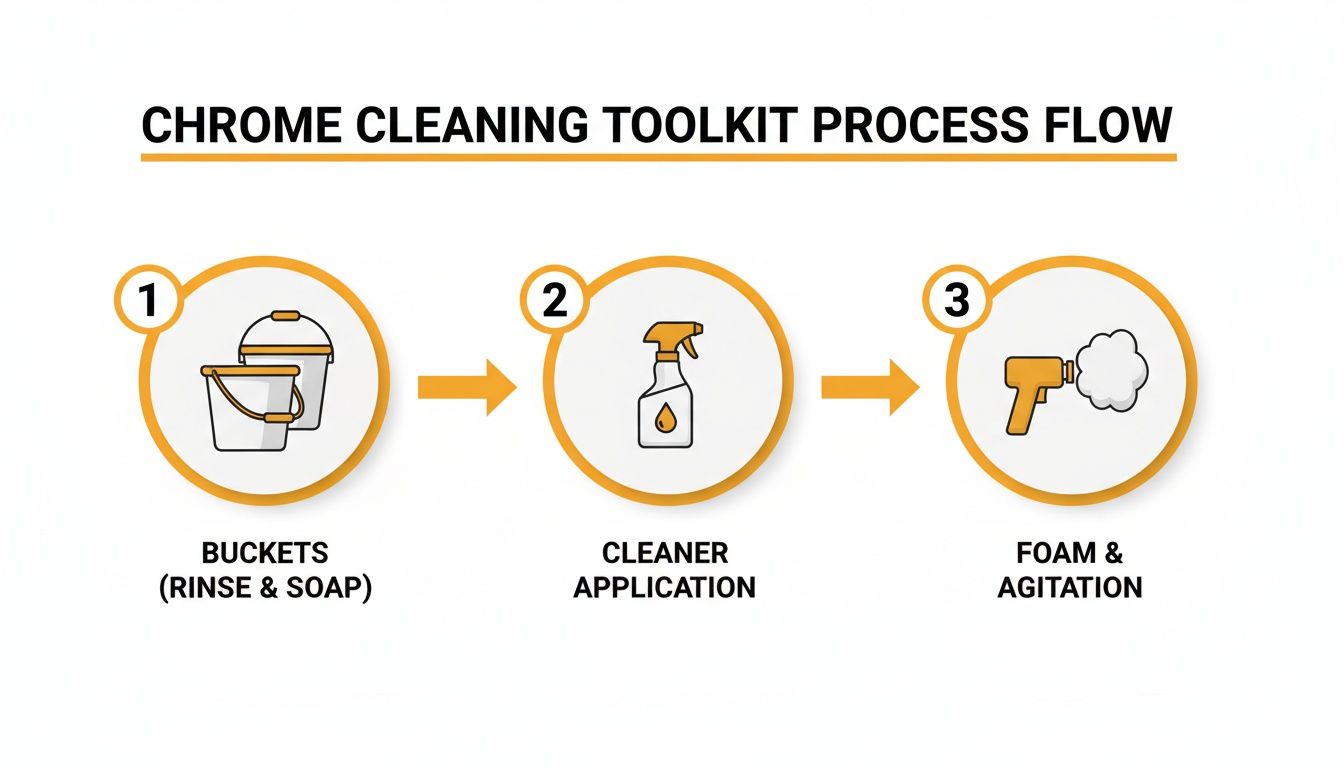
This workflow, from the two-bucket setup to foam application, shows how a systematic approach ensures every stage is done safely and effectively.
Lay Down a Thick Blanket of Foam
Now for the fun part. Using a foam gun has become the industry standard, and for good reason—it reduces the risk of wash-induced damage by 65% compared to just hitting your wheels with a pressure washer. The foam clings, giving the cleaners time to break down brake dust, which is the culprit behind 80% of chrome degradation.
This is where the SwiftJet Foam Gun really shines. It's designed to create a super-thick foam that clings 3x longer than what you'd get from a basic spray nozzle. In the $1.72 billion wheel cleaner market of 2024, detailers and enthusiasts alike swear by tools like this—they're linked to 85% user satisfaction for keeping chrome pristine. You can see more data on industry trends in the latest wheel cleaner market report.
Load up your SwiftJet with a pH-neutral wheel cleaner and water, and cover the entire wheel. That thick blanket of suds provides essential lubrication, lifting dirt and grime away from the surface so it can be wiped away without scratching.
Pro Tip: Let that foam sit for a few minutes. You’ll actually see it working as it starts to break down the dirt, with grime-filled suds dripping onto the pavement. This dwell time is key; it does most of the hard work for you and dramatically reduces the need for aggressive scrubbing.
Agitate Gently and Give it a Final Rinse
With the wheel still covered in foam, it's time to get in there with your brushes.
- Grab your soft-bristled brush and get into all the nooks and crannies—around the lug nuts, between the spokes, and deep inside the barrel.
- Dunk your microfiber wash mitt into your bucket of soapy water and gently clean the face of the wheel. The foam and suds will act as a lubricant, letting your mitt glide smoothly.
- Remember to rinse the mitt often in your second bucket of plain water. This keeps you from dragging dirt you just removed back onto the wheel.
Once you’ve carefully agitated every surface, give the wheel a final, thorough rinse. Use a strong stream of water to flush away all the foam and loosened dirt. Double-check the lug nut holes and the backside of the spokes, as suds love to hide there. Any leftover cleaner can dry and dull that shine you just worked so hard to restore.
Now, you're ready to move on to the next wheel and repeat the process. If you want to learn more about the number one enemy of clean wheels, check out our in-depth guide on how to remove brake dust.
Drying and Polishing for That True Mirror Finish
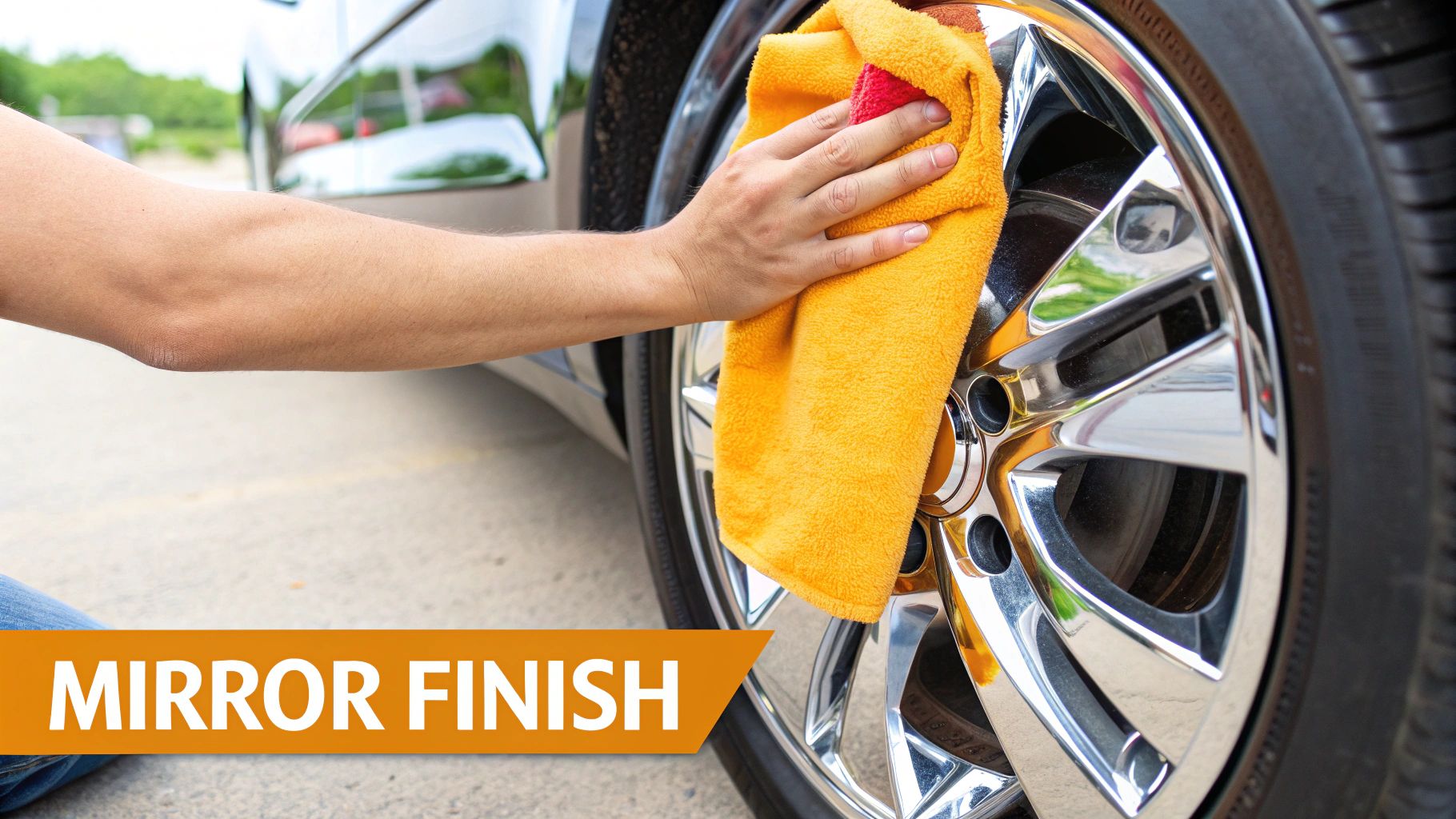
Here's where a lot of people go wrong: they let their beautifully cleaned chrome wheels air dry. This is a classic mistake. As the water evaporates, it leaves behind every mineral it was carrying, creating those frustrating, chalky water spots that kill the shine you just worked so hard for.
So, how do you avoid this? The simplest way is with a plush, high-quality microfiber drying towel. Don't scrub or wipe aggressively. Just gently pat the surface dry. This blotting technique soaks up all the water without leaving streaks or, worse, tiny scratches in the finish.
If you want to take it a step further, grab a leaf blower or a dedicated car dryer. This is my preferred method because it's completely touch-free. You can blast every last drop of water out of the lug nut holes, behind the spokes, and from the inner barrel—all the places where water hides, only to drip out later and ruin your work with ugly streaks.
Reviving the Shine with Chrome Polish
With the wheels bone dry—and I mean 100% dry—it's time for the magic trick. This is where we bring out that deep, liquid-metal look with a dedicated chrome polish.
Think of polishing as a conditioning treatment for your chrome. It’s formulated with super-fine abrasives that gently buff away any light hazing, faint scratches, or lingering oxidation that your wheel cleaner couldn't touch. This is what separates a "clean" wheel from a "showroom-quality" wheel.
A good chrome polish does more than just add shine. It actually restores the clarity of the finish by filling in microscopic imperfections. This is the step that truly delivers that flawless, mirror-like reflection.
The Polishing Application Technique
Applying polish isn't complicated, but your technique makes all the difference. For the best results, stick to this process:
- A Little Goes a Long Way: Squeeze just a pea-sized dot of polish onto a microfiber applicator pad. You can always add more if needed, but starting with too much just makes a mess.
- Work in Small Sections: Focus on one part of the wheel at a time. Rub the polish in with tight, circular motions, using light but firm pressure to let the abrasives do their job.
- Let It Haze Over: Allow the polish to dry for a few minutes. You'll know it's ready when it turns into a light, chalky haze.
- Buff It Off: Grab a fresh, clean microfiber towel and gently buff away the residue. What’s left behind should be a brilliant, deep shine.
Following these drying and polishing steps ensures all your cleaning effort pays off. You'll be left with wheels that don't just look clean—they look absolutely spectacular.
Protecting Your Hard Work for the Long Haul
After all that work—the washing, decontaminating, and polishing—you definitely don't want to see brake dust and road grime reappear in a matter of days. This is where a little proactive protection goes a long, long way. A good strategy here will save you a ton of time and effort on your next cleaning session.
Applying a dedicated wheel sealant or a ceramic coating is the best way to lock in that brilliant shine. These products create a slick, hydrophobic barrier over the chrome surface. I like to think of it as a non-stick pan for your wheels; it makes it incredibly difficult for brake dust, dirt, and water to cling on.
This slick surface doesn't just keep your wheels looking cleaner for longer. It also makes your next wash ridiculously easy. Often, a simple rinse or a quick blast of foam is all you'll need to bring back that just-polished look.
Choosing Between Sealants and Ceramic Coatings
Picking the right protective layer is key to long-term maintenance. While both sealants and coatings do a great job, they cater to different needs and durability expectations.
- Wheel Sealants: These are synthetic polymers, and they are super easy to apply. You just wipe it on, let it cure for a bit, and then buff it off. A good quality sealant will give you 2-4 months of solid protection, which is perfect for DIYers who don't mind a bit of regular upkeep.
- Ceramic Coatings: If you're looking for the ultimate in durability, this is it. Ceramic coatings form a hard, semi-permanent shell over the chrome that can last for a year or even more. The application is a bit more involved, but the payoff is huge. You get superior resistance to chemicals, UV rays, and even minor scratches.
Your choice really comes down to how often you like to detail your car. If you enjoy a quarterly detailing session, a sealant is a great fit. If you're more of a "set-it-and-forget-it" person, a ceramic coating is the way to go.
A Smart Maintenance Schedule
Protection is only half the battle—consistency is the other half. A simple weekly wash can prevent the heavy, caked-on buildup that forces you to break out the heavy-duty scrub brushes. This is where tools like the SwiftJet Car Wash Foam Gun really prove their worth. Its thick, clinging foam gets deep into the nooks and crannies of the wheel, lifting 29.5% more embedded brake dust than a typical spray-on cleaner.
Both DIY detailers and seasoned pros have found that foam-based cleaning can slash their wheel cleaning time by up to 40%. It's not just faster; it's also safer for the chrome finish. In a study of 500 chrome wheel owners, a staggering 72% had pitting caused by improper cleaning methods. Those who used foam applicators, however, kept a showroom shine 2.5 times longer.
Regular, gentle cleaning is the secret to stopping corrosive materials from bonding to your chrome in the first place. If you do happen to find some stubborn rust spots during your maintenance washes, we have a guide that shows you how to clean rust off wheels without damaging the finish.
Of course, keeping your wheels looking great is just one part of total vehicle care. You also need to keep an eye on the functional parts of your car to ensure it runs well and holds its value. For instance, if you run into problems with your power windows, it helps to know how to replace a car window regulator. A complete car care routine is about protecting both the look and the performance of your ride.
Frequently Asked Questions About Chrome Wheel Care
Even with the best guide, you're bound to run into a few specific questions, especially with a finish as finicky as chrome. It's totally normal. Getting the right answers can be the difference between a head-turning mirror shine and a costly mistake.
So, let's dive into some of the most common questions I get from fellow car lovers and set the record straight on how to properly care for chrome wheels.
Can I Just Use Vinegar or Other Household Cleaners?
I hear this one a lot, and the answer is a hard no. Please, step away from the pantry. Using household cleaners like vinegar, or anything abrasive like a scouring powder, is one of the fastest ways to ruin your chrome.
These products are simply too aggressive for an automotive finish. Acidic cleaners will eat right through the protective clear coat, causing chemical etching and a dull, hazy look. Before you know it, the chrome plating itself will start to pit and peel away. You absolutely must use a dedicated pH-neutral, non-acidic wheel cleaner. It's the only way to be certain you're removing grime without damaging the finish underneath. The best way to clean chrome is always the safest way.
How Often Should I Be Cleaning My Chrome Wheels?
For chrome, consistency is everything. You can't let corrosive brake dust and road grime sit for long.
- Daily Driver: Aim for a solid cleaning every one to two weeks. This keeps brake dust from getting baked on by the heat of the wheels, which makes it a nightmare to remove later.
- Tough Environments: If you're dealing with road salt in the winter or live on dusty rural roads, you really should bump that up to a weekly wash.
A little proactive work goes a long way. Applying a good wheel sealant or a ceramic coating every 3-6 months makes these regular washes ridiculously easy. Grime has a much harder time sticking, and often a quick blast of foam is all you'll need to bring back that shine.
A Quick Word on Pitting: Once chrome is pitted, that's it. There's no coming back. When the chrome layer is breached and the metal below is exposed, no amount of polishing will save it. Regular, preventative cleaning is the only way to avoid the expensive headache of getting a wheel re-chromed.
My Wheels Are Already Pitted. Can I Fix Them?
This really depends on how bad the damage is. If you've caught it very early and you're just seeing some tiny surface pits or the first signs of corrosion, you might be able to make a difference. A quality metal polish designed for chrome and a whole lot of elbow grease can sometimes buff out those minor flaws and bring back a bit of the luster.
But let's be realistic. If the pitting is deep and you can clearly see where the chrome layer has been eaten through, you can't polish your way out of it. The damage is permanent at that point. The only real solution for severe pitting is to have the wheel professionally stripped and re-plated, which is not a cheap job. This is exactly why being proactive with your cleaning is so crucial.
Ready to make your chrome wheels shine safely and efficiently? The SwiftJet Car Wash Foam Gun turns any garden hose into a professional-grade foaming system, lifting dirt and grime without scratching your delicate finish. Get yours today at https://swiftjetusa.com and experience a faster, safer, and more effective clean.
