

A proper auto detail checklist always kicks off with smart preparation, well before a single drop of water hits your paint. The real secret to a professional, swirl-free finish isn't just about the fancy products you buy—it's about how and where you use them. Getting your workspace and gear set up correctly is the absolute, non-negotiable first step.
Laying the Groundwork for a Perfect Detail
Every truly great detailing job is built on a solid strategy. The difference between a frustrating afternoon spent chasing streaks and a flawless, head-turning finish often boils down to the first ten minutes of prep. Trust me, jumping straight into the wash without a plan is just asking for a mediocre result, and you might even damage your car's paint in the process.
Think of it like painting a room in your house. You wouldn't just start slathering paint on the walls without taping off the trim and laying down a drop cloth, right? The same logic applies here. A few moments spent setting the stage will make the entire process smoother, safer, and far more rewarding.
Choosing Your Detailing Location
One of the biggest blunders I see DIY detailers make is washing their car in direct sunlight. When the sun is beating down, your car's panels get hot. That heat causes water and cleaning chemicals to evaporate almost instantly, leaving behind stubborn water spots and chemical stains that can be a nightmare to remove.
Do yourself a huge favor and find a shaded spot. A garage, a carport, or even just the shady side of your house will work perfectly. This keeps the surface cool and gives you plenty of time to wash, rinse, and dry each section without racing against the sun. Make sure the area also has decent drainage so you're not standing in a puddle of grimy water.
Staging Your Tools and Supplies
Get everything you’ll need gathered up before you start. Having all your tools, chemicals, and towels organized and within arm’s reach means you won’t have to stop mid-wash to go hunting for a brush or more soap. This is where the pros really gain their efficiency. If you're not sure where to start, checking a comprehensive list of essential https://www.swiftjetusa.com/blogs/news/car-detailing-supplies can be a huge help.
At a minimum, you should have your basic setup ready to go:
- Two Buckets with Grit Guards: One for your soapy water, one for clean rinse water. This is the foundation of a safe, swirl-free wash.
- pH-Neutral Car Shampoo: You want a quality soap that cleans well but won’t strip off any wax or sealant you already have on the paint.
- Multiple Wash Mitts: It's best practice to use one for the upper, cleaner parts of the car and a separate one for the grimy lower sections.
- Wheel and Tire Brushes: Always use a dedicated set of tools for the wheels and tires—they're the dirtiest part of your car.
- Drying Towels: A few high-quality, plush microfiber towels are non-negotiable for a scratch-free and streak-free finish.
A well-organized workspace doesn't just save you time; it drastically reduces the risk of cross-contamination. You never want the brake dust from your wheel brush accidentally ending up on your paint.
The Pre-Detail Inspection
Last but not least, do a quick walk-around. Get a feel for what you're up against. Look for problem areas like caked-on bug splatter on the front bumper, road tar behind the wheels, or tree sap on the roof. Spotting these issues now lets you pre-treat them, which will make the actual washing stage go much more smoothly. This initial once-over is also a great time to check your car's general condition, which is a key part of maintaining your vehicle's overall health. By working smarter, not harder, you're setting yourself up for a detail that truly shines.
The Exterior Wash and Decontamination Process
Alright, this is where the magic really happens. With your workspace set up and your tools at the ready, it's time to cut through all that grime and let the brilliant finish underneath shine through. A proper exterior wash is more than just making the car look clean—it's about safely lifting off abrasive gunk. That's a non-negotiable part of any serious auto detail checklist.
You're not alone in wanting a pristine finish. The whole process of washing and decontaminating a car has fueled a massive industry. The global car detailing services market was valued at around USD 41.4 billion and is expected to climb past USD 58 billion by 2030. That growth says a lot about how much people value keeping their cars looking great and lasting longer. It's way beyond a simple car wash now.
This simple flow chart lays out the critical first steps you should take before a single drop of water hits your paint. It’s all about setting the stage for a great result.

As you can see, a successful detail all comes down to a methodical approach. It starts with your location, your supplies, and giving the vehicle a good once-over.
The Pre-Rinse and Foam Cannon Stage
Before you even think about laying a wash mitt on the paint, you need to do a thorough pre-rinse. Grab a pressure washer—use a safe tip, like a 40-degree fan—and blast off all the loose dirt, dust, and bigger pieces of debris. The goal is to get as much of that grime off without actually touching the car, which dramatically cuts down your risk of scratching the paint later.
Next up: the foam cannon. This tool is a total game-changer for a safe wash. It lays a thick blanket of "snow foam" that clings to the car, and the cleaning agents immediately get to work breaking down and encapsulating dirt particles. This foam not only cleans but also lubricates the surface, lifting grit away from the paint so it can be rinsed off with minimal risk. Let the foam sit for a few minutes to do its job, but whatever you do, don't let it dry. Then, rinse it all away.
The Two-Bucket Wash Method
Now we're ready for the contact wash, and if you want to prevent swirl marks, the two-bucket method is your best friend. This system is brilliant in its simplicity: it keeps your clean, soapy water separate from your dirty rinse water. This ensures you’re not just dragging that abrasive grit right back across the car’s finish.
Here's how it works:
- First, dunk your clean wash mitt into the soap bucket.
- Gently wash a small section of the car, always working from the top down. Think about it: the roof, hood, and windows are the cleanest parts, while the lower panels and bumpers are the dirtiest.
- Before you go back for more soap, dunk and swish the dirty mitt around in the plain water rinse bucket. The grit guard at the bottom will trap all that nasty dirt.
- Wring out the mitt and head back to the soap bucket. Just repeat this process panel by panel until the whole car is sparkling.
By using one bucket just for rinsing your mitt, you're trapping the very dirt that causes those ugly micro-scratches. Honestly, this one technique is probably the most important habit you can develop for keeping your paint looking flawless. For a deeper dive, check out our complete guide to the two-bucket wash method.
Chemical Decontamination After the Wash
A solid wash gets the surface dirt off, but it won't do anything about the bonded contaminants that make your paint feel rough to the touch. This is where chemical decontamination becomes essential. These are specialized sprays designed to tackle specific types of grime that a normal car wash just can't handle.
To help you get started, here's a quick breakdown of the main exterior detailing phases.
Exterior Detailing Phase Breakdown
| Phase | Objective | Key Products / Tools |
|---|---|---|
| Pre-Wash | Remove loose dirt and debris without touching the paint. | Pressure Washer, Foam Cannon, Snow Foam Soap |
| Contact Wash | Safely clean the paint surface using a lubricated mitt. | Two Buckets with Grit Guards, pH-Neutral Car Shampoo, Microfiber Wash Mitt |
| Chemical Decontamination | Dissolve bonded iron particles and tar from the paint. | Iron Remover Spray, Tar Remover Spray |
This table outlines the core steps to get your vehicle's exterior truly clean before you even think about polishing or waxing.
-
Iron Removers: Your car's paint is constantly being hit with tiny iron particles from brake dust and industrial fallout. An iron remover spray triggers a chemical reaction with these particles, dissolving them. You'll often see it turn a dramatic purple color—that's how you know it's working.
-
Tar Removers: Those stubborn black specks of road tar, especially behind the wheels, need a dedicated tar remover. These are solvent-based cleaners made to dissolve sticky tar and adhesive gunk without forcing you to scrub aggressively.
Once you've applied these chemicals according to their instructions and rinsed them off, your paint will finally be genuinely clean. This smooth, decontaminated surface is now perfectly prepped for the next steps of claying, polishing, and protecting, wrapping up a crucial part of your auto detail checklist.
Giving Wheels and Tires the Attention They Deserve
If there's one golden rule in detailing, it's this: always clean the wheels and tires first. No exceptions.
Think about it. Your wheels and tires are, without a doubt, the dirtiest parts of your car. They're constantly pelted with road grime, mud, and worst of all, super-heated, corrosive brake dust. The last thing you want is to sling that mess all over your freshly washed paint. Tackling the dirtiest job first isolates the contamination and saves you from a world of frustration.
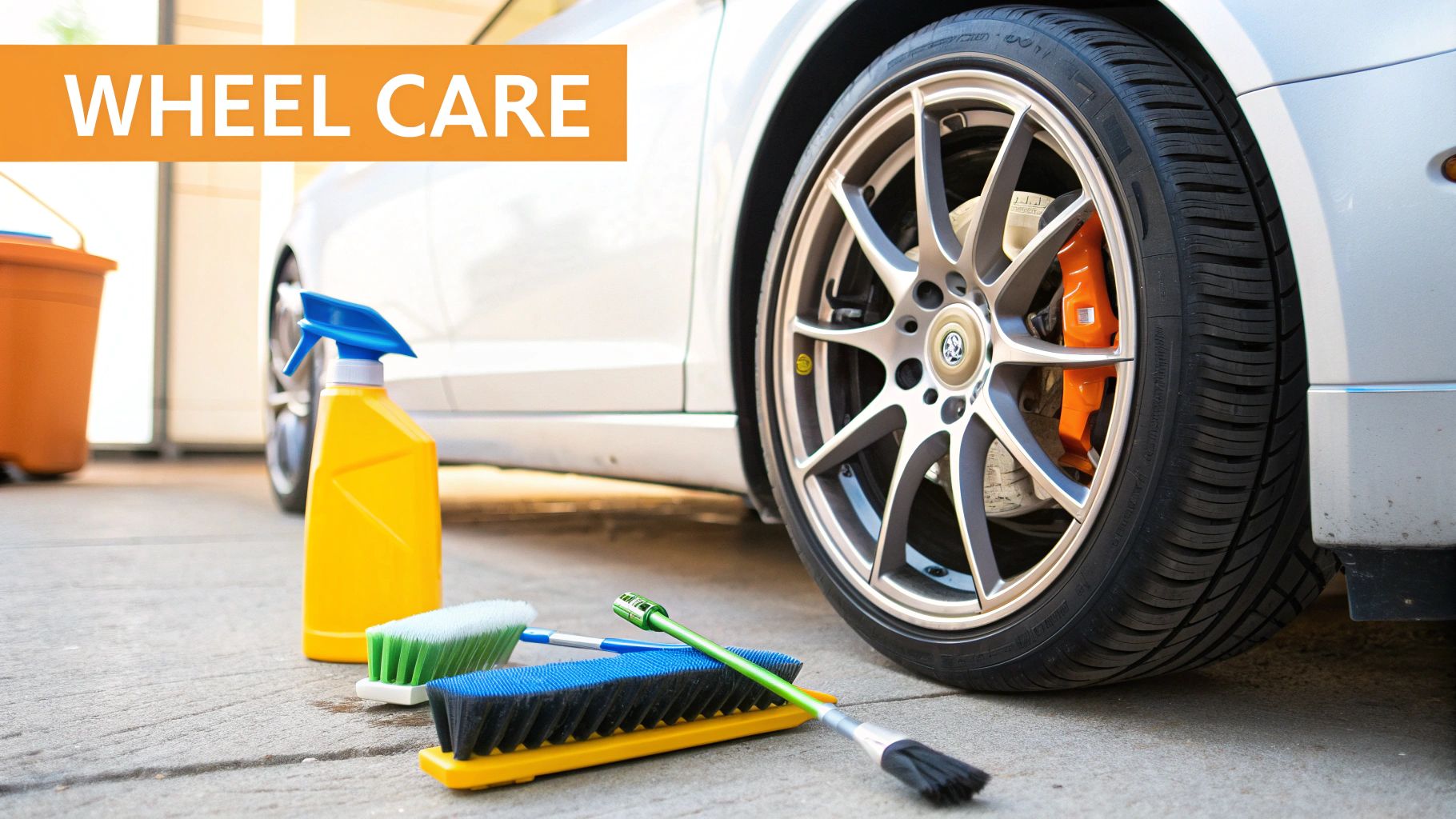
Picking the Right Wheel Cleaner
This is where a lot of people go wrong. Grabbing the wrong bottle can cause permanent, costly damage. Aggressive acidic or high-alkaline cleaners can literally etch and stain sensitive wheel finishes like polished aluminum, chrome, or anodized coatings. You have to know what you're working with before you start spraying.
When in doubt, a pH-neutral, color-changing iron remover is your best friend. These are safe on pretty much all factory wheel finishes. As they work, they react with the iron particles from your brake pads, turning a deep purple color—a cool visual that shows you it’s chemically dissolving the grime.
- For painted and clear-coated wheels: A pH-neutral cleaner or a good all-purpose cleaner is the safest route.
- For chrome wheels: Dedicated chrome cleaners work well, but read the directions. Leaving them on too long can cause hazing.
- For polished aluminum or anodized wheels: These are incredibly delicate. You must use a cleaner specifically made for these uncoated surfaces. No shortcuts here.
The cardinal sin of wheel cleaning is blasting a delicate finish with an aggressive, acidic cleaner. It’s a rookie mistake that can lead to hundreds, if not thousands, of dollars in damage. If you're even slightly unsure, read the label and test in a hidden spot.
The Wheel and Tire Cleaning Process
Alright, you've got the right cleaner. Now you need the right tools. Grab a dedicated "wheels-only" bucket—you never want the grit from your wheels ending up in your paint wash mitt. You’ll need a stiff-bristled tire brush, a softer brush for the wheel faces, and a long, flexible brush to get into the barrels.
First, give the whole wheel and tire a good rinse with your pressure washer to knock off the loose stuff. Then, spray your cleaner liberally over the entire wheel and the tire sidewall. Don't be shy; get it into every nook and cranny. Let it sit and work its magic for a minute or two, but never let it dry on the surface.
Now for the elbow grease. Grab your tire brush and scrub the sidewall. You’ll probably see a nasty brown foam come off—that’s old dressing and grime. Next, use your softer brush to agitate the face of the wheel and around the lug nuts. Finally, take that barrel brush and get deep inside the wheel. Cleaning the inner barrel is a pro move that really separates a good detail from a great one. Once you're done scrubbing, rinse everything thoroughly.
Dressing the Tires and Hitting the Wheel Wells
Clean wheels are great, but the job isn't done. Applying a tire dressing is what brings back that deep, black, factory-fresh look. Plus, a quality dressing adds a layer of UV protection to prevent the rubber from cracking and turning brown over time.
The trick is applying a thin, even coat. Modern dressings are either water-based or silicone-based. I personally prefer water-based products; they give you a more natural satin finish and are far less likely to sling greasy spots down the side of your car. Apply a little to a foam applicator, not directly to the tire, and wipe it on. Let it sit for a few minutes, then come back with a clean microfiber towel and buff off any excess for a perfect, dry-to-the-touch finish.
Don't forget the wheel wells! These plastic liners get caked in grime and can ruin the look of a perfectly clean wheel. A quick scrub with an all-purpose cleaner on a long-handled brush, followed by a spritz of a plastic dressing, will make them disappear into a clean, dark background. It’s a tiny detail that makes a huge visual impact.
Achieving a Flawless Paint Finish
This is where a clean car becomes a showstopper. Even after a meticulous wash and decontamination, your paint is likely still covered in bonded contaminants you can't see but can definitely feel. Go ahead, run the back of your hand over the hood. If it feels anything less than perfectly smooth, this is the part of the process that makes all the difference.
We're moving into the refinement stage of our auto detail checklist. This is all about physically and mechanically perfecting the paint surface—removing those stubborn impurities, fixing minor flaws, and then locking in all your hard work with a tough layer of protection. This is how you get your car looking incredible for months, not just days.

Creating a Glass-Smooth Surface with Clay
The secret to that slick, almost liquid finish is a step called "claying." You'll use a detailing clay bar or a modern clay mitt, gliding it across the lubricated paint. This specialized clay is designed to gently grab and lift out embedded gunk that washing and chemicals simply can't touch—things like industrial fallout, baked-on tree sap, and paint overspray.
The golden rule of claying is lubrication. Never, ever use a clay bar on a dry surface. It will absolutely cause marring and fine scratches. A dedicated clay lubricant or even a quality quick detailer spray provides the slickness you need. Work in small, manageable sections, about two feet by two feet, and glide the clay back and forth until you no longer feel or hear any grittiness.
As a section is done, fold the clay bar on itself to reveal a fresh, clean surface. This is critical to avoid dragging the contaminants you just pulled out all over the rest of the car. When you’re finished, the paint will feel unbelievably smooth to the touch, and it's now perfectly prepped for polishing.
Correcting Imperfections with Polishing
Now that the surface is truly clean, you can see the paint's actual condition. This is when you'll spot the fine swirl marks from previous washes, light scratches, and any oxidation that’s dulling the finish. The fix is polishing, which uses a mild abrasive to gently level the clear coat, erasing those imperfections and bringing back a deep, glossy shine.
You’ve got a couple of ways to tackle this:
- Hand Polishing: This is a fantastic starting point for tackling a small problem area or if you're just dipping your toes into paint correction. It’s more work, for sure, but the tool investment is minimal.
- Machine Polishing: Using a dual-action (DA) polisher is a game-changer. It’s vastly more efficient and gives you the kind of consistent, professional-grade results you see at a high-end shop.
The products you choose matter just as much as your technique. A cutting compound is more aggressive, designed to remove deeper scratches and swirls. A finishing polish, on the other hand, uses very fine abrasives to clear up any light hazing and refine the paint to a mirror finish. For a deeper dive, check out our complete guide on how to polish car paint and get stunning results.
Pro Tip: Polishing is, by its very nature, an abrasive process. You're removing a microscopic layer of clear coat to create a fresh, flat surface that reflects light perfectly. Always start with the least aggressive polish and pad combination you think you'll need to get the job done. You can always step it up if you need to.
Locking in the Shine with Protection
After all that effort to perfect the paint, leaving it exposed to the elements would be a crime. The final, crucial step is to apply a durable layer of protection. This is what shields your paint from UV rays, bird droppings, and road grime, all while boosting the gloss and making your next wash way easier.
This final protective layer is a huge reason why the auto detailing industry is booming. The U.S. car wash and auto detailing market's revenue was around USD 14.6 billion, and it's projected to climb to nearly USD 20.2 billion by 2025. People want advanced protection that goes way beyond a simple coat of wax.
Choosing the right protection is a balancing act between durability, looks, and how much effort you want to put in.
| Protection Type | Pros | Cons |
|---|---|---|
| Carnauba Wax | Gives an incredible depth and a warm, "wet" glow that many purists love. | Low durability, usually lasting only 4-6 weeks. |
| Synthetic Sealant | Provides strong, slick protection that holds up for months (4-6 months). | Can sometimes lack the deep, natural warmth of carnauba. |
| Ceramic Coating | The ultimate in durability (2+ years), chemical resistance, and insane water beading. | More expensive and requires a strict, meticulous application process. |
For most enthusiasts, a quality synthetic sealant is the sweet spot, offering fantastic protection without a difficult application. But if you're looking for the absolute best, longest-lasting shield for your paint, a ceramic coating is the pinnacle. Pick the right one for your car, and you've just checked off the final and most rewarding task on your auto detail checklist.
The Definitive Interior Detailing Checklist
A killer shine on the paint is great, but a truly impressive detail is one that feels just as good on the inside. After all, the interior is where you actually spend your time, so it deserves just as much attention as the exterior. The key is to work smart, which means cleaning from the top down so you aren't knocking dust and dirt onto areas you've already finished.
And this isn't just for enthusiasts. The demand for a pristine car interior is a huge driver in the global automotive care market. The Asia Pacific region alone makes up a 42.5% market share, pouring over USD 14.15 billion into detailing services. You can get more fascinating stats on the growing auto detailing industry on autoleap.com, but it proves one thing: people value a spotless car, inside and out.
Start With The Headliner and Upper Surfaces
Always, always start at the highest point in the car: the headliner. This is one of the most delicate surfaces you'll touch. If you get too aggressive with scrubbing or soak it with cleaner, the adhesive holding it up can fail. Trust me, fixing a sagging headliner is a nightmare you want to avoid.
The safe way to clean it is simple. Lightly spray a good interior cleaner onto a clean microfiber towel—never spray directly on the headliner itself. From there, gently blot and wipe any spots or dirty areas. This gives you enough cleaning power without running the risk of oversaturating the fabric.
The Art of a Thorough Vacuum
A proper vacuum job isn't just a quick once-over. It's a systematic process of hunting down every crumb, piece of lint, and speck of dust hiding in the car. First thing's first, pull out all the floor mats. You'll clean those separately later.
Next, slide the front seats all the way forward to get everything underneath, then slide them all the way back to hit the spots you just uncovered. You'd be amazed what you find under there.
- Crevice Tool: This is your secret weapon. Use it to dig deep into the seams of the seats, get into that tight gap between the center console and the seats, and trace along all the plastic trim panels.
- Dusting Brush: For the delicate stuff like the dashboard, instrument cluster, and air vents, use a soft-bristled brush attachment. It lifts dust without leaving behind any scratches.
- Upholstery Tool: The wider head is perfect for covering the main parts of the seats and the floor carpets efficiently.
Here’s a pro tip I swear by: Keep a stiff-bristled detailing brush in one hand and your vacuum hose in the other. As you vacuum, use the brush to agitate stubborn dirt out of the carpet fibers and seat seams. The brush dislodges what the suction alone can't grab.
Cleaning and Protecting Different Surfaces
Your car’s interior is a cocktail of different materials, and hitting everything with one "all-purpose" cleaner is a recipe for disaster. Using the wrong chemical can lead to fading, cracking, or an awful greasy finish that attracts more dust.
Identifying Your Interior Surfaces
| Surface Type | Common Locations | Recommended Product | Application Tip |
|---|---|---|---|
| Vinyl/Plastic | Dashboard, door panels, center console | Quality interior cleaner, UV protectant | Apply protectant with an applicator pad for an even, non-greasy finish. |
| Leather | Seats, steering wheel, shift knob | pH-balanced leather cleaner and conditioner | Use a soft brush to work cleaner into the grain, then wipe. Follow with conditioner. |
| Fabric | Seats, door inserts, headliner | Upholstery or carpet cleaner | Test on an inconspicuous spot first to ensure no color fading occurs. |
For hard plastics and vinyl, spray your cleaner onto a microfiber towel (not the surface) and wipe everything down. The crucial follow-up step is applying a dedicated interior protectant with UV blockers. This is what stops your dashboard from cracking and fading in the sun, leaving it with a rich, clean satin look—not a cheap, shiny one.
Leather is a two-step dance. First, clean it. Use a dedicated leather cleaner and a soft-bristled brush to gently lift dirt out of the grain. After wiping it clean, you have to apply a quality leather conditioner to put moisture back into the material, keeping it soft and preventing cracks.
Tackling Carpets and Upholstery
Once the heavy lifting with the vacuum is done, you can focus on any stains in the fabric seats or carpets. For most minor spots, a good all-purpose cleaner or a specific spot remover is all you need. Just spray the stain, let it sit for a minute, gently agitate it with a brush, and blot it up with a clean microfiber.
If you're dealing with seriously dirty carpets, a hot water extractor is the nuclear option. It injects a cleaning solution deep into the fibers and then sucks all the dirty water right back out. It pulls out grime that no amount of scrubbing or vacuuming could ever touch.
Final Touches for a Showroom Finish
It's the little details that separate a "clean car" from a "professionally detailed" one. Don't cut corners on these last steps.
- Streak-Free Glass: The two-towel method is non-negotiable for interior glass. Use one towel with an ammonia-free glass cleaner to do the actual cleaning. Use a second, completely dry towel to immediately buff the glass to a perfectly clear, streak-free shine.
- Clean Air Vents: Grab a soft detailing brush or one of those foam swabs and get deep into the air vent slats. This is where dust loves to hide and it makes a huge difference.
- Wipe Door Jambs: This is a classic pro touch. Open the doors and use a quick detailer to wipe down the painted door jambs and sills. These areas get filthy but are often overlooked. A clean door jamb is a sign of a job well done.
Got Questions? Let's Talk Detailing.
Even the most detailed checklist can't cover every question that pops up when you're in the garage, tools in hand. I get it. Over the years, I've heard them all, and a few key questions come up time and time again. Getting these sorted is often the difference between a good result and a great one.
So, how often should you really be doing a full-blown detail? Honestly, there's no single right answer. It all comes down to how you use your car. If it's your daily workhorse, battling traffic and weather, a complete detail—we're talking clay bar, polish, and sealant—every three to four months is a solid goal. But for that prized weekend car that lives in the garage? You might only need to go all-out once a year. The real secret is keeping up with regular maintenance washes in between.
Polish, Wax, or Sealant? What’s the Real Difference?
This one trips up a lot of people. It’s easy to think they’re all just "shine products," but they have very different jobs. Nailing this distinction is fundamental to getting that flawless, protected finish you're after.
Let's break it down simply:
- Polish: Think of this as paint correction. It’s a liquid with fine abrasives that gently removes a tiny layer of the clear coat. This is what smooths out those annoying swirl marks and fine scratches, bringing back that deep gloss.
- Wax and Sealant: These are all about protection. They don’t fix anything. Instead, they create a protective barrier on top of your paint to guard against UV rays, bird droppings, and road grime.
Here's an easy way to remember it: Polishing is like exfoliating your skin to get it smooth and clear. Waxing or sealing is like applying a high-quality moisturizer to protect that fresh, healthy skin.
Is the Hype Around Ceramic Coatings Real?
You've probably seen ceramic coatings everywhere, usually with a hefty price tag attached. So, are they actually worth it? For anyone serious about long-term paint protection, the answer is an emphatic "yes."
A properly applied ceramic coating isn't just a wax substitute; it's a semi-permanent shield for your paint that can last two or more years. This gives your car incredible resistance to chemicals and UV damage. The best part? The insane water-beading effect, which makes washing the car ridiculously easy because dirt and grime just slide right off with the water. Sure, the upfront cost is more than a bottle of wax, but when you factor in the longevity and superior protection, it’s a smart investment for your vehicle.
Ready to take your car wash to the next level? The SwiftJet Car Wash Foam Gun turns any standard garden hose into a foam-blasting machine. It’s the key to a safer, more effective wash. Get your SwiftJet today and see the difference for yourself.
